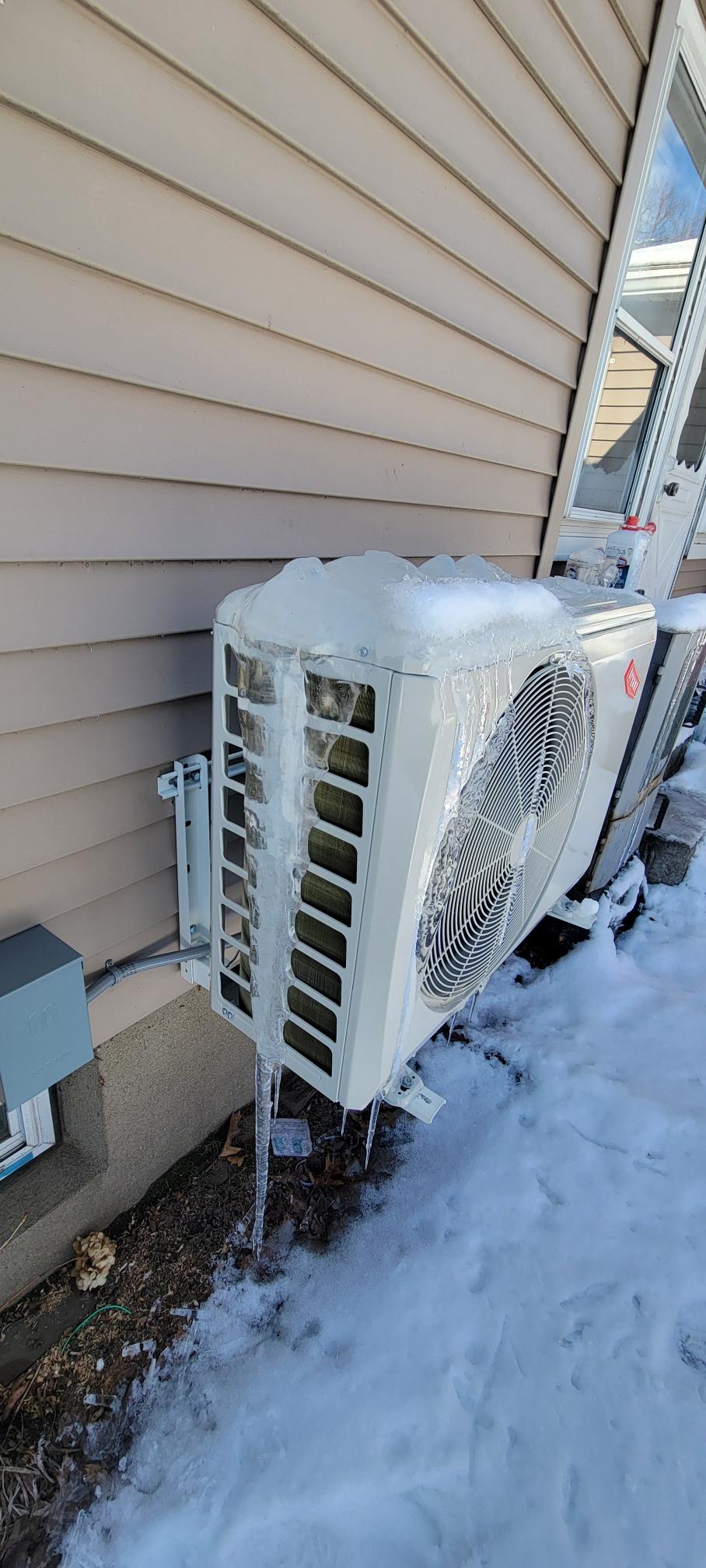
Is Your Heat Pump Frozen???
Have you looked outside this winter and seen a frozen piece of equipment? Have you noticed that your heat pump is not keeping your home as warm as it previously was? There might be something deeper going on, so before you give up on these fine equipment or call the professional, try these troubleshooting steps first.
Here are some facts about heat pumps:
The Defrost Cycle: In the winter, a heat pump extracts heat from the outside air. This makes the outdoor coils very cold - often colder than the air itself. Moisture in the air then freezes onto those coils. To fix this, the unit periodically switches into "cooling mode" for a few minutes. It temporarily reverses the flow of refrigerant to send heat to the outdoor coils to melt the ice.
Signs of a Defrost Cycle:
The outdoor fan will stop spinning.
You might hear a "whooshing" or shifting sound.
Steam (which often looks like smoke) may rise from the unit as the ice melts.
You might feel a brief puff of cooler air from the indoor units or vents.

Efficiency Vs. Temperature: It is a fact that heat pumps have to work harder as the mercury drops. There is less heat energy available in the air when it is 0 degrees F compared to 40 degrees F. Most standard heat pumps are incredibly efficient down to about 25F to 32F. Below this, their Coefficient of Performance (COP) - the ratio of heat produced to energy consumed - begins to drop. However, Cold Climate Heat Pumps are now manufactured to be efficient down to -17F to -22F
When Ice is a Problem (The "Frozen" Heat Pump): A light dusting of frost is fine; a block of ice is not. If the unit is encased in a thick layer of ice that doesn't melt after 30 minutes, there's an issue. Some common causes of excessive icing are as follows:
Restricted Airflow: Dead leaves, snow drifts, or a clogged air filter.
Mechanical Failure: A broken defrost timer, bad sensor, or faulty reversing valve.
Low Refrigerant: If the "freon" levels are low, the coils get much colder than they should, causing instant icing.
Gutters: Leaky gutters dripping water directly onto the unit can cause a solid "ice cap" that the defrost cycle can't handle.


Troubleshooting: What to do if it's Frozen: If you find your outdoor heat pump unit looking like an ice cube, follow these steps:
Clear the Debris: Safely remove any snow, leaves, or trash from around the base and sides of the unit. It needs at least 2 feet of "breathing room." If there is snow on top of the unit, brush it off. You can also install a heat pump snow cap to prevent snow accumulation directly on top of the heat pump. As seen on the very first image at the beginning of this write up, there is snow accumulation on the heat pump. It seems as the defrost cycle runs, the snow melts on top and then refreezes on the side of the heat pump.

Check the Gutters: Make sure no water is dripping unto the unit from above.
The "Warm Water" Trick: To help the heat pump along with defrost cycle, you can gently pour warm (not boiling) water over the coils to help melt the ice build up.
Warning: Never use a hammer, ice pick, or screwdriver to chip away ice. The copper coils are fragile, and one slip can lead to a very expensive refrigerant leak. Not to mention the coils can bend and restrict air flow.
Call a Pro: If the ice returns immediately after you melt it, the defrost board or refrigerant levels need professional attention.
The Edison Path Checklist: Before you call a technician, run through this quick list:
Check the time: Has it been frozen for more than 45 minutes? (if less, it might just be a normal defrost cycle).
Look for steam: Do you see steam rising from the unit? (That's a good sign - it means it's working!).
Clear the perimeter: Is there snow, ice, or leaf buildup within 2 feet of the unit?
Inspect the gutters: Is a leaky gutter dripping directly onto the top of the unit?
Check your filter: Is your indoor air filter clean? (Restricted airflow inside can cause freezing outside).
Still frozen solid? Don't let a winter freeze-up turn into a permanent breakdown. If your unit is encased in ice and won't thaw, it's time for a professional diagnostic. Understanding your heat pump is the first step, but keeping it maintained is the most important. Click Here to schedule a free consultation!
The path may be rough and complicated but one step at a time gets us there. Thanks for following us on the path to stewarding our God-given resources. Cheers!
